Thursday, 3 May 2012

Wireless Networking – A Boon In The World Of Technology.

Being in an airport, coffee shop, library or hotel reminds us of the wireless network that we are surrounded with. Many people use wireless networking to connect their computers at home and use the technology to provide free or low cost internet access to residents. It is assumed that in future you will be able to access the internet anytime and anywhere without the use of wires.

In today's present scenario, Wireless networking is important for many reasons. Wireless security is important for the safety of the individuals. Whether at home or in the premises of any company, wireless network solves your many problems. The manner in which people all around the world access information in a fast manner was not even imagined in the past. Wireless Networking removes the binding wires that were earlier required for connection in the internet. It brings dynamism into the world of technology and people can connect with each other in the most convenience places. The appeal of wireless networking is amazing as it covers a number of aspects. People can work outside the office at their own convenience and students can relish the library access from anywhere.

There are various kind of networking that is available to the people such as WPAN which is typified by Blue tooth technology where an individual can use wireless devices like connecting Blue tooth headphones to the computer or mobile phone. The WLAN is famous as Wi-Fi and many people benefit from this kind of connection. In a bigger scale the WMAN is an interconnection of WLAN points. For outdoor and wider areas, the WWAN is used. Networks of business branches as well as public Internet access can be done in this method. Aside from computers and networks, mobile phones can also benefit from wireless networking. Mobile phones use a variety of technologies like 3G and also service plans to use mobile networks to check emails and access the Internet.

Technology surprises us with amazing innovations every day and wireless networking is meant to bring ease into the life of individuals. People are awaiting new form of wireless networking to improve their access towards information.

Tuesday, 1 May 2012

Hide The Imperfections With HDMI Wall Plates

What if a beautifully decorated room is spotted with wires hanging around the walls? No doubt, the décor of the room would be of no worth then. So, to make your home entertainment room looks more fantastic concealing the messy wires and run cables become really important. And for this choosing the wall plates becomes very crucial.

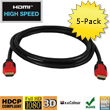
As this is a hi-tech world, every thing has touched its line of perfection say for example the high definitions T.V sets and home theatres. Even people prefer to use HDMI cables. So using the HDMI wall plates would be a helpful addition to home entertainment since it will help you to conceal long hdmi cables in the wall and only have shorter wires exposed.

HDMI is a popular digital alternative to the lesser quality analogue transmitting interfaces. Your TV, 3DTV, Blu-ray player, DVD player or recorder, games console, digital camcorder, PC, digibox or Sky box may be HD enabled. Many people choose high definition equipment for their crystal clear visuals which enhance the viewing experience. HDMI wall plates are wall connectors featuring a HDMI port. They are commonly used to create a neat connection behind wall-mounted HD enabled TVs. The flat surface of HDMI wall plates has connection ports, and the wiring is hidden behind the plate and in the wall. If you are going down the market you are bombarded with a diverse choice of different types of HDMI wall plates.

Now the question arises which one to choose when you are provided with a number of choices. Whether a Single or Dual port HDMI? – Certainly go for the dual if you don’t mind the price difference. Any kind of HDTV you buy today will have at lease 2 HDMI ports so you should also think about that. There are some other options too like that of the HDMI wall plate with fly lead, HDMI wall plate with cable. The former one features a socket on the front of the plate and a socket on the rear, ready for a HDMI cable to be plugged in. The trailing lead is 155mm, which allows the cable to be curled inside a single gang back box. And the latter features a socket on the front of the plate and a plug on the rear. The cable attached removes the need for an extra connection in the cable run. The cable simply comes straight out of the back of the socket and runs to a plug at the other end, ready to plug into a device or another wall plate. Both these wall plates comes with the facility of Ethernet.  It is designed and tested to handle video resolutions of 1080p and beyond, including advanced display technologies such as 4K, 3D, Deep Color, plus an additional, dedicated data channel, known as the HDMI Ethernet Channel, for device networking.

So, if you find bunch or say mess of wires all around wall plates would be the best option to grant a professional look to your walls and enjoy your home entertainment to the fullest.

Wednesday, 25 April 2012

Digital Camera Cables: A Must-have for Every Camera Owner!

Digital cameras are fantastic, they capture image as true to the original and they come with fantastic features which makes them unique, which is their capability of interconnectivity. One can connect a digital camera to their PC, laptops or PDA device which makes it enable to upload all the images one have captured for the purpose of making memory card free so that it can capture more images. And this transfer of images to your hard drive makes it easy for you to edit, or even share or send them with anyone around the world conveniently through World Wide Web using Ethernet or WI-FI. But for the purpose we need to connect a digital camera with a terminal which is possible through using a Digital Camera Cables.
  
A cable is a must in case your digital camera and the terminal do not have Bluetooth or infrared support. A Digital Camera Cable is in fact the only way through which one can transfer heavy files from their digicams on to their systems. There are plenty of advantages of using such USB cables which makes them unavoidable to be used and makes them the most convenient way to be used for the purpose. That is not all one can even upload stuff from computers or any other portable terminal to a digital camera too. We can upload latest firmware upgrades, fun enhancements, and useful programs, from internet to our digital camera by downloading through digital camera cables. There are other highlights too like, with use of this digital camera cable we can even make use of our digital cameras to get connected with our friends and family and it becomes a great medium of communication provided this feature is enabled in the model you are connecting. 
 
Digital Camera cables makes the task of transferring images very simple and fast in comparison to other modes which are time consuming an less effective. These cables also makes lots of space available in the portable memory stick by transferring hefty amount of data and can even connect directly to the printer making the process quick and highly effective. We can also connect two digital cameras to one another with the help of digital camera cables, through which we can exchange images between two devices without even following the lengthy process. 
 
Any one possessing a digital camera is supposed to buy a Digital Camera Cable. The manufacturers are offering variety of these cables at great prices. And this being necessity, one need to be aware about the variety and quality of cables, and one should always make sure that the item should be original and guaranteed. Many online stores like cables.com and others provide cables for quite low prices in comparison to buying from the markets which involves lot of money, time and energy.


Tuesday, 13 March 2012

Fiber Optic Cable – A Way Out For Faster Transmission Of Signals.

Since time immemorial we have been in awe of the wonders of technology. Innovations in technology impact us in many ways and bring about changes in our lifestyles. It has made our life lightning speed fast and we are completely enamored by the gifts of technology. Internet being one such gift of technology has made itself indispensable to the lives of individual. Nevertheless there is constant effort to better this very gift of technology so that it becomes lightning fast. The only effective way to deliver this type of future in which everything is surfed at break neck speed is with a fiber optic based infrastructure that primarily uses fiber optic cable. Besides offering significant increase in connection speed, fiber optic networks offer a tremendous capacity to keep up with any new technological advances.

Fiber optic cable is a cable composing of different layers. The optical fiber elements are typically individually coated with plastic layers and contained in a protective tube suitable for the environment where the cable will be deployed. It is used to relay signals at very fast speed. It is generally made of glass that is long lasting and even stronger than copper and more able to retain its transmission properties after physical stress such as weight strain, or even attack by rats and cockatoos. The fiber that is installed in fiber optic cable is different from copper: in good quality coatings, inside ducts, or in the case of newer systems, encased entirely by electrical transmission wires.

Apart from using a fiber optic cable for relay of data we can use a wireless mode of data transfer but the advantage of using an fiber optic cable lies in the fact that there is no loss of data and much more data can be encoded and sent with fiber optics, and the effective bandwidths are always going to be larger. That's not to say that wireless solutions are poor, rather they have a place that complements the offerings of fiber optical systems.

A form of fiber optic cable is HDMI (High-Definition Multimedia Interface) that is a compact audio/video interface for transmitting uncompressed digital data. It represents a digital alternative to consumer analog standards, like radio frequency (RF), coaxial cable, composite video, S-Video, SCART, component video, D-Terminal, and VGA. Coming in a variety of different types they are meant to bring sophistication to the world of technology.


Upgrade The Wiring With HDMI Cables And Feel The Difference

I still remember the day when I first bought my home theater which included speakers, five disc DVD player, and a receiver. I remember with what excitement I opened the box. But all my excitement turned into a shock when I just plugged the wire and I found that the cable was torn apart on a little stretch. No other option left out, instead of searching out for the best HD (high definition) cables available in the market. After many a clicks I came across a name which I can count on- HDMI (High Definition Multimedia Interface). 

HDMI (High-Definition Multimedia Interface) is a compact audio/video interface for transmitting uncompressed digital data. It represents a digital alternative to consumer analog standards such as Radio Frequency (RF) coaxial cable, composite video, S-Video, SCART, component video, D-Terminal, and VGA. HDMI connects digital audio/video sources such as set-top boxes, Blu-ray Disc players, personal computers (PCs), video game consoles, and AV receivers to compatible digital audio devices, computer monitors, and digital televisions.

The transition from analog to digital in the video world has been quick and a key enabler of this has been HDMI, High Definition Multimedia Interface. Virtually all HD equipment utilizes HDMI to transport audio/video from the sources to the display. The original rendition of HDMI, HDMI 1.0 was released back in 2002 and has been the de facto standard for HD Video transmission. As the digital revolution has continued, HDMI has also evolved from 1.0, 1.1, 1.2 and mostly recently HDMI 1.3.HDMI data rate of 4.95 Gbps 1.2 supports aggregate whereas HDMI 1.3 has provision for up to 10.2Gbps, the transition will be gradual with the first devices available to achieve 6.75Gbps initially.

HDMI cables are available are designed in variety of ways like Plenum HDMI, Mini HDMI and Micro HDMI and HDMI Fiber Optic Cable. HDMI cables in a variety of lengths and colors. Flat HDMI cables, due to their thinner form and higher flexibility, make in-wall installation easier, and also allow for installation behind molding and under carpet (though under-carpet installs should be avoided in areas of high foot traffic). Because the wires are spread out flat rather than bundled, there is less potential for signal bleed between them. Mini and Micro HDMI cables are used for the latest mobile phones and video camcorders with an HDMI connector. Fiber Optic HDMI cables provide unmatched signal performance and complete transparency over a very wide range of input resolutions with lengths up to 100 meters. HDMI over fiber optic cables enable signal to be carried much further than conventional HDMI cables without boosters. HDMI over fiber optic is ideal for in-wall long wire runs. So, a wide range and scientifically upgraded HDMI cables allow you to choose the best suited to your demand and needs.


Thursday, 8 March 2012

Digital Camera Cables

Cables.com offers the lowest prices on digital camera data transfer USB cables for all your digital photography needs. You can get the highly efficient digital camera cables on your one stop online shopping site.


Works with devices that require 4 pin mini-B connectors, such as many cell phones, digital cameras, and others, enabling connection to computers.


Whether you need a high-quality HDMI cable for your home theater, are setting up a CCTV network, wiring your home office, or simply need a USB cable for your iPod, you will find what you need at Cables.Com.  Datacomm Cables (AKA Cables.Com) is a distributor and manufacturer of fiber optic, networking, and Ethernet cable and stocks cabinets, racks and patch panels.


Sunday, 12 February 2012

Patch Cables Cat5e : Connecting Electrical Components

Patch Cable or Cord is an electrical or optical cable which is used to connect one electronic or optical device to another for signal routing.Patch Cables are available in different colours so that they will be easily distinguish.Due to the advanced technology , patch cords includes different types such as Microphone Cables , XLR Connector , RCA Connector etc..Patch cord must be short as 3inches (or approx 8cm) so that it will be able to connect stacked components or route signals through a patch bay or as long as 6 meter or more for snake cables .

Mostly Patch cable cat5e are made up of coaxial cables, with the signal carried through a shielded core, and the electrical ground or earthed return connection carried through a wire mesh surrounding the core. Each end of the cable is attached to a connector so that the cord may be plugged in. A patch cable connects two network devices. Patch cables are typically CAT5 / CAT5e Ethernet cables linking a computer to a nearby network hub, switch or router .

There are different types of Patch Cords available in the market such as :


  • Single-conductor wires using banana connector
  • Coaxial Cables using BNC connectors
  • Twisted pair Cat5, Cat5e, or Cat6 cables using 8P8C (RJ-45) modular connectors with T568A or T568B   wiring
  • Optical fiber cables.


Initially the Cat5 Cable is widely used.But due to the advancement in technology Category 5 has been superseded by the Category 5e (enhanced) specification .The statndard lenght of Cat5e Copper Cable decided by ANSI/TIA/EIA standard is 100 metre.But if someone needs to transfer data at longer speed , one must use switch , or repeaters , if needed . Cat 5e Patch Cables suitable for your data and networking requirements . Mostly all of the Cat5e Cables are flush moulded and colour coded with strain relief boots and all cables are tested to meet all industry standards.
Patch Cable really helps in connecting the electonic devices such as routers , modems etc..A multipair (usually 4 pair) high performance patch cable that consists of twisted pair conductors, used mainly for data transmission.
Same as Cat5 Cable , its enhanced version ,Patch Cable Cat5e Cable also become an officially part of 568A Standard.Due to the advanced version , one can easily opt Cat5e Cable which has more fetures and qualities than Cat5 Cables.


Tuesday, 17 January 2012

Fiber Optic Cables- Connecting The World At A Faster Pace

Communication industry has been stormed by the advent of fiber optic cabling. The key advantages that are offered by these cables include greater bandwidth, light in weight, small size and definitely has more flexibility. In addition to it, the core reason behind its popularity is that advanced technology used by these cables.


As a matter of fact, the whole fiber optic technology makes use of optical fibers. These optical fibers are thin, ultra-flexible and transparent and transmit the light between two ends of the fiber quality as compared to copper wire. So, with their superior technology these are more appropriate for smooth communication between far distances. In addition to it, the usage of these cables results in much less loss of signals which means uninterrupted and smooth communication. To tell you the truth, currently more than 80% of far distance data traffic is transmitted by using this smart optical fiber technology. “Total internal reflection through a light source transmitted by a fiber cable” is the main principal on which whole fiber optic communication is based. Mainly, quality plastic material is used for making these cables. However, these can be made from plastic clad silica or glass in accordance with the budget and application for which these cables are being used. Copper wires used electronic signals to transmit signals whereas light pulses are being used in Fiber optics cables to transmit signals.

Other advantages of Fiber optic cables include it is inexpensive and suits properly to extremely thin diameters in the range between 0.8mm to 40mm. Being extremely thin, a number of fibers can be joint together letting many connections to run in the same cable. It provides clearer phone connections as well as TV receptions, as the light signals which are in the same cable do not hamper each other's functioning. This ultimately results into much less loss of signals. These cables can also be called as the safer ones because no electricity passes through these cables and hence there will not be any fire issues.

In comparison with other wires like copper wires, these cables are definitely the superior ones because these are light weighted and small sized. With above mentioned advantages, it’s evident that why fiber optics cables are being used in many telecommunications and computer networks. These cables are regarded as the most trusted and best replacement of copper wires.


Thursday, 15 December 2011

HDMI Switches


HDMI Switches a video by customcables1 on Flickr.

Cables.com offer HDMI Switches are used to run multiple HDMI cables to one device. These switches are useful for those who are connecting multiple High Definition devices to a single HD output (or multiple, in some cases), and wish to switch from one device to another.

Monday, 17 October 2011

Cat5e Patch Cables- The Nerves Of Fast Internet Connections


This is instant age therefore people want everything to be done instantly for them. The good thing about this era is that we have everything readily available within just few clicks. And the credit goes to Internet. The advent of Internet has tuned our world into a global hub. It is quick and cost effective which ultimately makes our lifestyle more convenient. Right from taking information, education, entertainment and personal concerns to business matters, the Internet service has made it all easily accessible. Whenever we talk about Internet connection and good connectivity there are few essential tools that will automatically come into the conversation are ISP, modems or routers and undoubtedly patch cables. In the simplest terms, the patch cables are used for building connections between numerous optical and electrical devices.


Now, when the usage has grown from leaps to bounds, the usage of these cables has grown immensely. In the range of these networks Cat5e patch cables are regarded as one of the best cables that facilitate first-rate connections. At the time of manufacturing the Cat5e patch cables there are various factors that are carefully considered so as a result these cables are often made in different colors. It allows the user to simply distinguish them even in the most complicated hubs. Needless to mention, the Cat5e patch cable has the ability to run near or even at gigabit speeds and these are extensively used for networks that uses 100 Mbit/s or a gigabit network that gives performance of up 100 Mhz. So, high speed data transmission is easily possible with these patch cables. 


A great feature associated with Cat5e patch cables is that these are available with a lifetime warranty. Therefore, you don’t need to worry much about these maintenance and working. You will find these cables at a number of hardware shops in the nearby market. However, visiting every retail shop personally will require a lot of time, energy as well as money. Perhaps, browsing through the web will help you in gathering easy information about these cables. In addition to it, there are various online portals offering these products at better rates. You can always compare products from two or more websites and can acquire your favored product at optimal rates.


Thursday, 1 September 2011

Get Uninterrupted Network Speed With Cat5e Patch Cables


We often face the problem of slow internet connections despite having the best server employed. Mostly, we believe this reduced speed is because of some problem in the server. But to tell you the truth, the key reason behind this issue is the use of low quality patch cords. The patch cables such as Cat5/Cat5e are basically used to make connection with or in between network devices and applications. It is an individual category of cables that are known as Ethernet cables and are widely used for connecting computer systems with different devices like hubs, switches and routers.

Now to talk about Cat5e Patch Cables, these are mainly used in Ethernet connections where you have to join a host of the computing device for better connectivity. Also, the connection of some sophisticated telecommunication platform including ATM is supported by these cables. The biggest advantage of Cat5e patch cables is that it allows high-speed data transmission smoothly. And it meets the cable related requirements of most Ethernet environments with ease.

What makes the Cat5e patch cables widely popular is the fact that these cables have a run length of around 100 meter which is adequate enough for perfect cabling in a small or even medium size Ethernet environment. You can avail the Cat5e patch cables with both shielded twisted pair as well as unshielded twisted pair. Additionally, the twisted pair Cat5e comes in two different categories i.e. solid and standard. For supporting longer lengths, you can use solid Cat5 patch cables and standard Cat5 cables are more supportive for short distances and even for portable cabling.

However, in recent times Cat6 and Cat6e patch cables are developed that gives run length of 550 mere and even up to 1000 meters respectively. But their drawback is that these doesn’t work well will most of the network devices that a particular network use. In addition to it, these are brand-specific and work only with some particular software and hardware. That is why Cat5e patch cables are much more popular and globally accepted. Also, it is a reasonably priced option that easily supports high speeds.

You can easily gather more information about the Cat5e Patch Cables over the Internet. Also there are many portals offering these at better prices. And you can do a bit of online research that will help you in getting required products at better rates.

Monday, 29 August 2011

Set Up An Excellent Personal Home Theater System With Home Theater Cables

You must have bought a brand new HD TV recently and you are planning to setup a personal home theater system. And yes, you also got that Blu-ray DVD player to make watching full-screen high definitions DVDs quite a worthwhile experience. Most probably, at the same time, you still own the stereo components and that older DVD/VHS recorder you want to set up and use together with the new HDTV. The home theater cables is no or a little different from the paper shredder cable.  Made up of copper, this cable works best with appliances like DVD players, home theaters and other items of routine use.


The last two decades saw a tremendous change in the types of connections used for new consumer electronic products. The right home theater wiring would involve three basic types of cable connections that are needed for proper setting up or installation of a home theater sound system where the home theater receiver performs all the audio/video switching. There is no doubt you always want to connect the right A/V source components to the receiver with the high-quality home theater cables. This way you can experience the high-performance and utmost simplicity of the system operation. But make sure all connections are made with equipment power off and unplugged.

Ideally using HDMI cables, you can easily connect outputs from each source like a Blu-ray disc player, video game console and or HDTV receiver to the inputs on the back of the home theater receiver. Also connect the video monitor output to the matching video input on the HDTV or projector back. Easily run the speaker wire from the speaker outputs to each of 5-7 surround sound speakers, in addition to the subwoofer cable from the sub pre-out jack on the receiver to the input on the powered subwoofer. The BD-Live and Network streaming video capabilities Blu-ray Disc players needs to be connected to the network using the Ethernet cable to experience all the ‘plus’ possibilities for entertainment. The video cables in decreasing order of quality include HD video cables that include DVI and component video cables. The non-HD video cables include S-video and composite video. The digitally-rich audio cables come in two types, popularly known as the optical and coaxial audio cables.

Every home theater source components lacking an HDMI output needs to be connected to the receiver with separate audio/video cables other than home theater cables. The size and the layout of the room actually decide the length of the cables needed to connect speakers to the receiver. Probably, at least 100 feet of total ‘in-wall’ speaker wire will be needed to connect speakers to the receiver. 

Thursday, 23 June 2011

Working Knowledge of Customized and Regular Cables

The times of instant gratification has made it essential for human beings to keep the household products of everyday use handy. The well-organized and comfortable lifestyle is instinctively leading to technological advancement. The introduction of different kinds of gadgets in our day to day life has greatly influenced the working of cables and wires industry.

High-quality electric cables are used for installation in buildings and industrial sites and areas to supply current for different usages. The factors that determine the construction and working mechanism of cables are voltage, current-carrying capacity, and ever-changing environment conditions. Thus, it becomes imperative that the right kind and quality of cable is chosen with different appliances and devices.

Cables are available in numerous constitutions and sizes and materials. They are used for variety of applications. From commercial to industrial, cables serve countless household purposes. However, in these high times of innovation, consumers can get custom cables as per the requirements and working of their particular device custom-built for them by the manufacturer. Importantly, the manufacturer should be given specifications about the kind of cables to be used in the particular device before he starts assembling it. The best example to display rightful working of custom cable is the number of wires that run inside the wall to light up a particular place or the home. 

Networking cables are mainly used in IT and IT related service industry to connect one network device to the other. Before installing network cables like coaxial cable, optical fiber cable, and twisted pair, the topology, protocol and size of the network should be taken into consideration.

A power cord is a kind of cable that is used to temporarily connect the device to the electronic supply through wall socket or extension chord.  A power cord might work on a retaining clamp, a mechanical device that will prevent the appliance coupler from accidentally being pulled or shaken loose. The usual application areas that require stricter safety comprise medical technology, stage and lighting technology as well as in IT. The AC power cord utilizes similar kind of application to function properly.

Interestingly, the home theater cable is no different from paper shredder cable.  Made up of copper, these cables work best with appliances like DVD players, home theaters and other items of routine use.

Brighten up your surroundings with light, prepare appetizing pizza in the oven, browse round the world through your PC or sleep well in AC. Remember one thing, cables are our lifeline and so is their efficient usage capacity.